
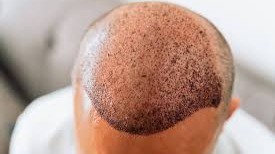
Each hair on the human body grows from its own follicle – a tiny, self-contained unit with its own blood supply and growth cycle. Modern hair transplant surgery relies on this exact fact, carefully relocating individual follicles so they can continue growing in a new place.
The Midrash Tanchuma tells a story about a man struggling to make a living. He was a Kohen whose role included examining cases of tzara’as – a Biblical skin condition described in the Torah, often translated as “leprosy,” though it is understood to be something quite different.
As he prepared to leave home in search of work, he began teaching his wife how to recognize it.
He explained that each strand of hair has its own tiny life source. When that source dries up, the hair is affected – one of the signs associated with tzara’as.
His wife responded with a simple but powerful thought: If each individual hair has its own source of sustenance, then surely the person – who sustains all those hairs, and a family besides – will be provided for as well.
That idea changed his mind. He stayed and things worked out.
What’s striking is that he didn’t learn anything new. He already believed, in principle, that things would work out. But belief in the abstract often isn’t enough when you’re facing real uncertainty.
Instead of a vague idea – “things will be okay” – she pointed to something concrete and almost visual: thousands of tiny, individual systems, each sustained with precision. That made the idea feel real.
The takeaway is simple: If you want an idea to stick – whether for yourself or others – don’t just explain it. Make it visible.
Because sometimes, the difference between hesitation and action isn’t new information. It’s seeing what you already know in a way that finally clicks.