
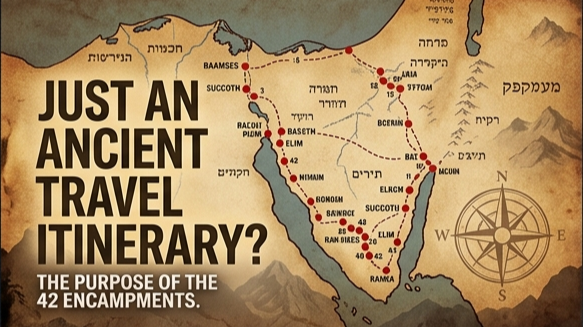
Some parts of the Torah are unforgettable—the Exodus, the giving of the Ten Commandments, the splitting of the sea.
Then there are chapters we tend to read quickly, like the list of the 42 wilderness encampments.
Yet the Torah devoted just as much care to preserving those names as it did its more dramatic narratives.
Rabbeinu Bachyei, the 13th-century Torah commentator, offers a beautiful explanation.
The purpose of the list is to help us appreciate the miracle of the Jewish people’s survival in the wilderness and, through that, recognize G-d’s mastery over nature.
Without this record, later generations might begin to rationalize what happened. Perhaps the wilderness wasn’t really so inhospitable. Maybe the camps were close to civilization, where food and supplies could be obtained. Perhaps the land was difficult, but still capable of sustaining life.
The Torah counters that instinct by recording every stop along the journey. In the generations when these locations were still known, readers understood exactly what those names represented: remote, barren places where a nation could not survive naturally. The list itself reinforced the recognition that the Jewish people endured only because of G-d’s providence.
Today, we no longer know where most of these places were. The names themselves no longer paint a picture of the harsh wilderness.
So what does this list accomplish for us?
Perhaps the answer lies not only in what the Torah records, but in when it chose to record it.
The generation that traveled through the wilderness did not need this list. They had lived the experience. The detailed record was written for the generations immediately afterward—people who had not witnessed the miracles themselves, but who still knew these places and understood what they represented. Reading this chapter deepened their appreciation of G-d’s providence and strengthened their faith.
Today, the names no longer evoke those same images. But the list still serves an important purpose. It reminds us that the generations closest to these events read these very words, understood exactly what they meant, and built a deep conviction upon them. That conviction became part of the spiritual foundation they passed on to their children, and ultimately to us.
Perhaps that is one reason the Torah invested so much in recording these 42 encampments.
If something is meant to endure, it needs a strong foundation. The Torah strengthened the faith of the generations best positioned to grasp this message, knowing that the foundation they built would support generations that could no longer experience the wilderness as they had.
The details of those campsites have faded from memory. But the faith they helped establish continues to guide us today.